Key Takeaways
- The property title legally defines your ownership rights, renovation limits and long-term responsibilities as a homeowner.
- Some landed properties are Strata Titles, not Individual Titles. This means you do not own the land standalone and cannot change the exterior (façade) of your home without management approval.
- An Individual Title offers the most flexibility for structural extensions and modifications, whereas a Strata Title keeps your home’s footprint fixed to maintain a uniform community appearance.
- Factors like Bumi Lot restrictions or poorly managed facilities in a strata development can shrink your pool of potential buyers and lower your property’s future market value.
- Choosing the right title starts with lifestyle planning. Balance your need for freedom, costs, future expansion and level of control to ensure the property fits both current and long-term needs.
Homebuyers focus on what they can immediately see and feel. Will the kitchen layout work for how we cook and gather? Are there enough bedrooms for both now and the years ahead? Does the living room get that soft, comfortable light in the afternoon?
These are the details that make a house feel like home. Naturally, they take centre stage before you make a decision.
In comparison, the legal aspect of property buying tends to fade into the background. It’s tempting to skim through the fine print or leave it entirely to agents and lawyers, especially when it comes to property titles.
But this is exactly where Malaysian homebuyers go wrong. Finishes can change, layouts can evolve, but your property title defines what you truly own and what you can do with it.
Let’s discuss what property titles mean and how to choose the right one from the start.
What is Property Title in Malaysia?
Three Types Of Property Title In Malaysia
In Malaysia, the property title is a legal document issued by the government to prove ownership of a specific piece of land or a unit within a building. It acts as the final word on who owns the property, what the land can be used for and any restrictions that apply to it.
| Master Title | Strata Title | Individual Title | |
|---|---|---|---|
|
Property type |
Entire development (pre-subdivision) |
Condos, apartments, gated & guarded landed |
Terrace houses, semi-D, bungalows |
|
Ownership |
Held by the Developer |
You own a parcel of land & share common areas |
You own the house and the land plot |
|
Maintenance |
Managed by Developer |
Management Body
|
Owner (Self-managed) |
|
Renovations |
Subject to the Developer/Master plan |
Strict (External changes restricted) |
Generally allowed |
Broadly, there are three main types of property titles you’ll come across: Master Title, Individual Title and Strata Title. Each serves a different purpose and applies to different stages or types of development.
Master Title
A Master Title is the original title issued for an entire piece of land before it is subdivided. This is most commonly seen in new or ongoing developments. At this stage, the entire project is still legally considered one single plot under the developer’s name.
Once the project is completed, the developer is responsible for subdividing this master title into separate individual or strata titles, which are then transferred to each property owner.
Strata Title
A strata title is a form of ownership where a development is divided into individual units, each with its own title. It refers to multi-level developments such as condominiums, apartments and retail complexes.
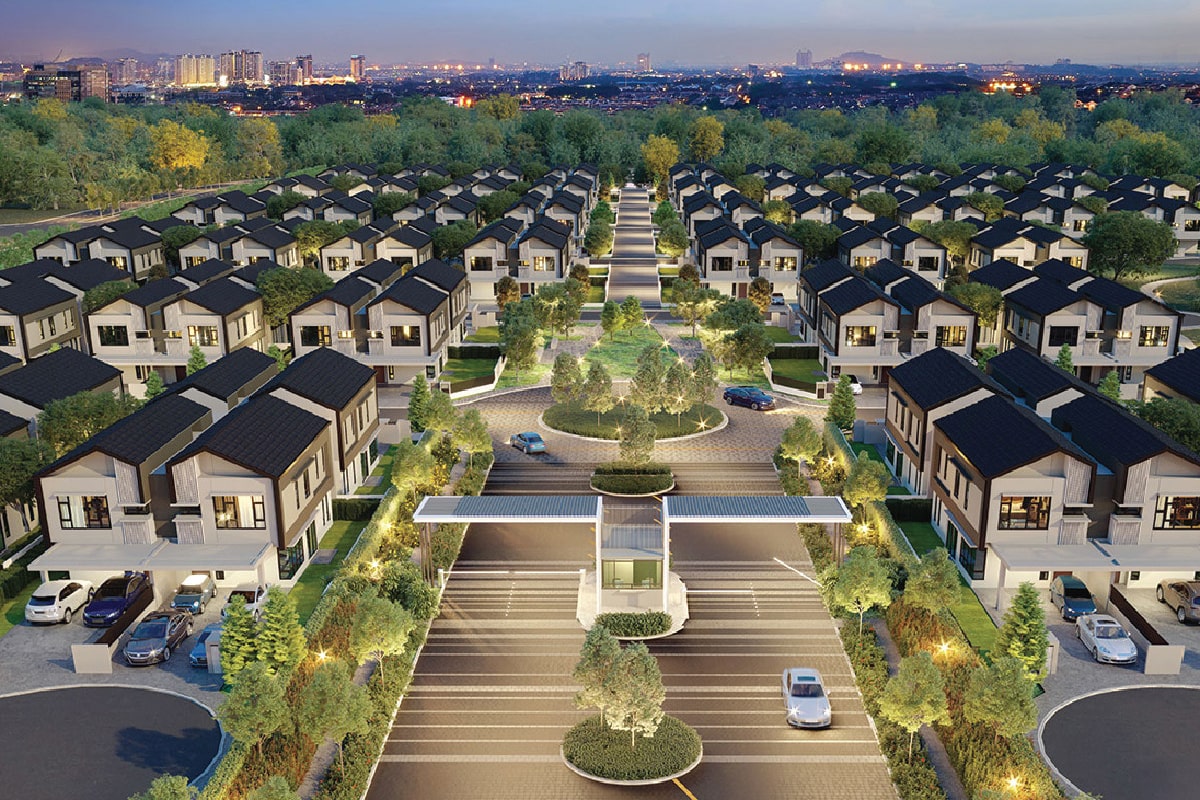
That said, strata living is no longer limited to high-rise buildings. In recent years, more landed developments have adopted a strata structure, especially within larger townships. They are strata landed properties: landed homes within a managed community that share amenities like clubhouses and landscaped parks.
- There are also a few important ownership considerations to understand:
- What you own is a parcel of land within the development, not full standalone ownership of the land and structure
- The exterior (façade) of the unit is considered part of the shared property
- Any changes to the façade usually require approval from the management body
- Owners are responsible for maintaining their unit, including its external appearance
Individual Title
When you hold an Individual Title, you are the sole owner of both the structure of the house and the specific plot of land it sits on.
This type of title typically applies to landed properties such as terrace houses, semi-detached homes and bungalows. Unlike strata properties, there is no subdivision into smaller parcels within a larger shared structure. What you buy is what you own.
Here are the key features of individual title properties:
- You are not part of a mandatory management body. You do not have to pay monthly service charges or sinking funds. However, it also means you are responsible for every repair, from a leaking roof to a broken perimeter fence.
- You have more freedom to modify your home. While you still need approval from the local municipal council for structural changes, you do not need permission from a private management committee.
- Your property is governed by the local council. They are responsible for public services like collecting trash and cleaning the public drains in your neighbourhood.
Reasons Why Malaysian Homebuyers Buy the Wrong Property Title
The Landed Means Full Ownership Misconception
The biggest mistake is assuming that every terrace house, semi-detached home or bungalow automatically comes with an Individual Title. In modern Malaysian real estate, many new developments are actually Landed Strata.
For example, a buyer might purchase a house intending to extend the kitchen or change the front gate, only to find out the Management Corporation (MC) forbids it.
Under the Strata Management Act (SMA) 2013, you cannot change the exterior of your home (the facade) without approval from the management. This means you might be prohibited from changing your gate design, window frames and even the colour of your roof tiles.
They Overlook Ongoing Responsibilities and Costs
Buyers calculate their monthly budget based on their bank loan repayments, but they ignore the recurring costs associated with specific property titles.
For landed strata homes, these costs are often higher than those of high-rise units because of the large land area that requires gardening and cleaning.
You are also required to pay sinking funds. This is an additional mandatory contribution for long-term repairs (like repainting the clubhouse).
So, if you choose a property title with high maintenance costs but do not intend to use the facilities (like the gym or pool), you are essentially paying for services you do not value.
They Overlook Ongoing Responsibilities and Costs
Buyers calculate their monthly budget based on their bank loan repayments, but they ignore the recurring costs associated with specific property titles.
For landed strata homes, these costs are often higher than those of high-rise units because of the large land area that requires gardening and cleaning.
You are also required to pay sinking funds. This is an additional mandatory contribution for long-term repairs (like repainting the clubhouse).
So, if you choose a property title with high maintenance costs but do not intend to use the facilities (like the gym or pool), you are essentially paying for services you do not value.
They Focus on Purchase Price, Not Long-Term Value
There is nothing wrong if you choose a property because it fits your budget. However, you always have to consider that the property title will heavily influence the property’s future resale value.
Say you have a Strata title. The value of your home is partially tied to how well your neighbours behave. If the Management Corporation (MC) is inefficient or if residents stop paying their fees, the common facilities will deteriorate.
A green, unwashed swimming pool can cause your property value to stagnate, even if the inside of your unit is in perfect condition.
They Assume All Gated Communities Work the Same Way
Gated and guarded is one of the most attractive phrases in property marketing. But in reality, not all gated communities operate the same way, and the difference comes down to the property title behind it.
There is an important difference:
- Strata developments: Legally gated, with a Management Corporation (MC) that enforces rules under the law
- Individual Title (guarded communities): Security and rules are organised by residents, typically through a residents’ association, with less formal legal authority
What does this mean in practice?
In a strata development:
- Security measures are legally enforceable.
- Residents must follow bylaws and community rules.
- Maintenance, security and facilities are centrally managed.
- Monthly fees are mandatory and structured.
In an individual title guarded neighbourhood:
- Security is often based on mutual agreement among residents.
- Enforcement depends on cooperation, not legal obligation.
- Some homeowners may choose not to participate or pay.
- Rules (e.g. parking, renovations, usage of space) may be harder to standardise.
Buyers who don’t fully understand this difference go in with certain expectations, only to realise later that the experience doesn’t match what they had in mind.
Not Understanding Bumi Lot Restrictions
Another common issue is not realising that a property may be classified as a Bumiputera (Bumi) Lot, which comes with specific ownership and resale limitations.
A Bumi Lot is a property unit reserved for Bumiputera buyers as part of Malaysia’s housing policy. The Malaysian government requires developers to allocate a certain percentage of units (often around 30%) to Bumiputeras.
The Bumi status is attached to the title. If a non-Bumi buyer wants to buy your house later, you must apply for consent to transfer, which is a notoriously difficult and lengthy process without a guarantee of approval.
If the release is rejected, you can only sell your house to another Bumiputera buyer. This shrinks your pool of potential buyers. It will force you to sell the property at a lower price than the market average for Non-Bumi units.
How to Choose the Right Property Title
Start With How You Want to Live
Ask yourself how you intend to live in the home. Instead of thinking in abstract terms, ask yourself more practical, real-life questions:
- Do I want full control over my home, or am I okay with certain rules?
- How important is it for me to renovate or customise my space over time?
- Will I want to extend my kitchen, add rooms or change the exterior in the future?
- Am I comfortable seeking approval before making changes to my own home?
Now think beyond the house itself:
- Do I prefer a uniform environment where everything looks consistent?
- Or am I okay with neighbours having different designs?
- Do I like the idea of shared facilities like a gym or clubhouse?
- Realistically, will I use these facilities often?
Then consider your daily convenience and responsibilities:
- Do I want a fully managed environment where maintenance, landscaping and security are handled for me?
- Or am I comfortable taking care of repairs and security arrangements myself?
- Would I rather pay a fixed monthly fee for convenience, or manage costs on my own over time?
Once you answer these honestly, you have a clearer direction.
If you want to be solely responsible for your home, renovate whenever you like and avoid monthly maintenance fees, look for an Individual Title. If you want 24/7 security, a swimming pool and manicured gardens without having to lift a finger, a Strata Title is the right choice.
Think Beyond Today—Plan for the Next 5–10 Years
Some homebuyers stay in a property for at least seven to ten years. During this time, your life goals will likely change. The property title you select must be able to grow with you.
For instance, if you are a young married couple buying a starter home, you might need an extra room or a larger kitchen in five years.
- With an Individual Title: You have the flexibility to build upwards or outwards. You can convert a porch into a study or add a second floor to accommodate a growing family.
- With a Strata Title: Your footprint is fixed. If you need more space, your only real option is to sell and move, as structural extensions are almost always prohibited to maintain the building’s uniform design.
Understand the True Cost of Ownership
Look at the total cost over time. Consider the following factors:
- Monthly maintenance fees (for strata properties)
- Sinking fund contributions
- Personal maintenance and repair costs (for individual titles)
This is because a lower purchase price can be deceptive. An Individual Title might have a higher upfront cost but lower monthly outgoings. Conversely, a Strata property might be more affordable to buy, but the monthly fees over 20 years could add up to the price of a small car. Calculate the total cost of living before making your final decision.
Consider Your Exit Strategy
Even if you think this is your forever home, life happens. You may need to sell due to a job relocation or a desire to upgrade.
Ask yourself:
- Will this property be easy to sell later, or will it require more time and patience?
- Are there restrictions (e.g. Bumi Lot status, strata rules, renovation limitations) that reduce the number of potential buyers?
- Does the title type appeal to a wide range of buyers, or only a specific group?
- Are there ongoing costs (maintenance fees, sinking funds) that future buyers might find unattractive?
The more restrictions tied to the title, the smaller your potential buyer pool, and the longer it may take to sell.
Final Thoughts
Buying a home is portrayed as a romantic milestone. In reality, it is rarely that poetic. More often than not, the process requires you to be practical and stay grounded.
Success in the Malaysian property market is about doing the unromantic work:
- Reading the fine print of the Sale and Purchase Agreement (SPA)
- Confirming whether the property is under Master, Individual or Strata Title
- Understanding what you own and what you don’t
- Asking what approvals are needed before making any renovations
- Factoring in ongoing costs like maintenance fees and sinking funds
- Clarifying who manages the property and how rules are enforced
Just take the time to ask the right questions and understand the basics before you commit.
If you’re exploring new developments, it helps to look at developers who plan their projects with long-term livability in mind.
Developers like Hong Bee Land offer townships such as Templer Residence, which are built on Individual Titles. This gives homeowners more flexibility. Renovations are generally permitted, and the setup is guarded (not gated). At the same time, residents enjoy modern amenities within a well-planned community.
The choice of title today dictates your freedom tomorrow. If you are looking for a home that grows with you, rather than one that keeps you boxed in, discover how our developments are designed for real life. Explore our residential projects today.